
Itchy, irritated eyes? You’re not alone. In fact, many people experience this uncomfortable symptom. Also, more often than not, the root cause is an eye infection. These infections can affect anyone – regardless of age or daily habits. In many cases, targeted eye drops for an eye infection can stop the problem before it worsens
Bottom line: The fastest way to feel better is using the right eye infection eye drops correctly, adding lubricating drops for comfort, and getting prompt guidance when symptoms escalate.
From mild redness to more serious inflammation, eye infections can range in severity. However, there is good news. In fact, relief often comes in the form of eye drops designed to treat the underlying cause.
This guide will walk you through the different types of eye infections, symptoms to watch for, and how to choose the right drops for fast, effective relief. You’ll also learn simple tips to prevent infections and keep your eyes healthy long-term.

Eye infections can cause a range of uncomfortable symptoms – from red, itchy eyes to discharge and blurred vision. Also, these infections may be bacterial, viral, fungal, or linked to allergies or contact lens use. Furthermore, no matter the source, early treatment is essential to avoid complications.
In many cases, specially formulated eye drops can reduce inflammation, fight infection, and help your eyes heal faster. They’re often the first line of defense in managing both mild and moderate symptoms.
Equally important is preventing infections in the first place. Practicing good hand hygiene, wearing UV-protective sunglasses, using contact lenses safely, and eating a diet rich in eye-friendly nutrients can all help reduce your risk. For a deeper dive into prevention strategies, visit our guide on how to prevent eye infections so you can protect your eyes every day.
There are several common types of eye infections, each with different causes and symptoms. Because of this, understanding which one you may be dealing with can help guide proper treatment.
While symptoms can vary depending on the type of infection, these are the most common signs to watch for:
If you notice one or more of these symptoms, it’s a good idea to start treatment promptly. Left untreated, eye infections can worsen and affect your vision.
The right type of eye drops depends on the cause of your eye infection. Here’s a quick overview of common options and how they work:
If you’re ever in a pinch and don’t have medicated drops, be cautious before using alternatives. Read our guide on the safety of using contact solution as eye drops before trying a substitute.
Not all eye drops are the same. The best choice depends on what’s causing your infection. Here’s a breakdown of the main types and what they’re used for:
| Type of Eye Drops | Description | Common Uses |
|---|---|---|
| Antibiotic Eye Drops | Target and kill bacteria that cause infection. |
|
| Antiviral Eye Drops | Help stop viruses from multiplying in the eye. |
|
| Antifungal Eye Drops | Combat fungal infections, which are rare but serious. |
|
| Lubricating Eye Drops | Relieve dryness and irritation; often used alongside other treatments. |
|
Tip: Many people find relief from the discomfort of infections by pairing medicated eye drops with soothing lubricants. Therefore, keeping your eyes moist can speed up healing and reduce irritation.

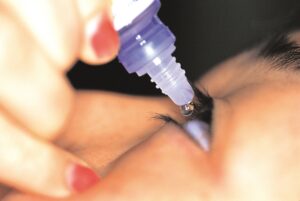
Using eye drops the right way helps you get the most out of your treatment. Follow these simple steps to make sure your eyes get the relief they need:
Q: Can I use over-the-counter (OTC) eye drops for an eye infection?
A: Some OTC drops may soothe symptoms like redness or dryness, but they won’t treat the actual infection. However, always check with an eye care provider for proper diagnosis and treatment.
Q: How long should I use eye drops for an infection?
A: Treatment time depends on the type and severity of your infection. Follow your doctor’s instructions exactly and don’t stop early, even if symptoms improve.
Q: Can I wear contact lenses while treating an eye infection?
A: No. Remove contacts during treatment and wait for your provider’s okay to start wearing them again. When you’re ready to restock, check out 1-800 Contacts for affordable, fast delivery of your prescribed lenses.

Q: Are there any side effects from using eye drops?
A: Possible side effects include temporary stinging, mild burning, blurry vision, or eye irritation. If symptoms are severe or don’t go away, contact your eye doctor.
Q: Can I share my eye drops with someone who has a similar infection?
A: No. Sharing eye drops can spread infection and may not be safe for others. Each person should use their own medication as prescribed.
Want to prevent eye infections before they start? Look for hygiene, contact lens safety, and diet tips woven throughout this guide – they’re simple steps that can make a big difference.
Eye infections are common, but that doesn’t mean they should be ignored. Recognizing symptoms early and starting the right treatment – especially with targeted eye drops – can help you avoid complications and feel better fast.
We’ve covered the most common types of infections, how to identify them, and which kinds of eye drops offer relief. Whether you’re treating a bacterial issue or simply soothing irritated eyes, there’s a solution that fits your needs.
Remember to follow proper drop technique, stick to your doctor’s advice, and take simple steps to keep your eyes clean and protected. Prevention goes a long way – especially if you wear contact lenses or are prone to irritation.
If your symptoms get worse or don’t improve, don’t wait. Reach out to your eye care provider for guidance. The sooner you act, the better your chances of a quick and safe recovery.
Thanks for reading! Here’s to clearer, healthier eyes – every day.