
Do your contact lenses feel scratchy or uncomfortable by the end of the day? Before assuming it’s dry eyes, ask yourself this: have you tried to rehydrate your lenses? Rehydrate contacts the right way, and you may notice a big difference in comfort and clarity.
Bottom line: Properly rehydrated contacts improve comfort, protect eye health, and help you see clearly all day long.
We know staying hydrated helps our bodies – your lenses need it too. Without enough moisture, contacts can become stiff, irritating, and blurry. In this post, you’ll learn how to rehydrate contacts properly, when it’s better to replace them, and how to avoid dehydration in the first place.
Let’s make your lenses last longer and feel better – starting now.
For safe ways to relieve dryness, redness, or irritation while wearing lenses, review our complete eye drops guide to compare condition-matched drop options.
As we dive deeper into how to rehydrate contacts, it’s important to understand why this matters. Of course, your eyes rely on clear, comfortable lenses to function properly. Similarly, a car needs clean oil to run smoothly. Without proper hydration, your lenses can’t deliver the comfort or clarity your eyes depend on.
When contact lenses dry out, they lose flexibility, become harder to wear, and may even scratch your eyes. But with the right care, you can rehydrate them and restore comfort fast.
Let’s break down why rehydration is key, what causes dryness, and how you can prevent your lenses from turning against you.
Before you rehydrate your lenses, it’s important to understand what dehydration really means for your eyes. When lenses dry out, they become stiff, irritating, and less breathable. This makes every blink uncomfortable.

What Is Contact Lens Dehydration? Simply put, dehydration happens when your contacts lose the moisture they need. This makes them harder, less flexible, and more likely to irritate your eyes – like a dry sponge instead of a soft one.
What Causes It? Several things can dry out your lenses. Low humidity, dusty or windy conditions, and too much screen time all speed up moisture loss. Using tap water or saliva to rinse your lenses is never recommended. In fact, it can also worsen the issue and invite bacteria.
Why It’s a Problem: Dry lenses aren’t just uncomfortable. They can trap debris, lose clarity, and put your eyes at risk. In fact, over time, this may lead to infections or painful corneal ulcers.
How to Spot It: You may feel your lenses more than usual. In addition, your vision might blur, even after cleaning. Redness, dryness, or stinging are signs your lenses may need to be rehydrated – or replaced.
| Signs of Dehydration | Description |
|---|---|
| Dryness | Lenses feel rough or dry on the eye |
| Blurred Vision | Vision clarity drops – especially after long wear |
| Irritation | Eyes sting, itch, or feel uncomfortable |
| Redness | Eyes look bloodshot – often near the end of the day |
| Reduced Comfort | You become aware of the lenses more than usual |
If these symptoms sound familiar, consider using a Dry Eye Relief Therapy Device. It’s a complete at-home kit designed to improve daily comfort and support lens hydration.
Now that you know how dehydration affects your contacts, let’s talk about how to fix it. The good news? You have several easy ways to rehydrate contacts and keep them feeling fresh all day.
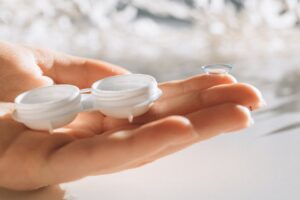
Have questions about how to rehydrate contacts the right way? You’re not alone. Below are answers to some of the most common concerns.
Also, don’t forget: at 1-800 Contacts, you can order the same lenses your doctor prescribed – delivered fast and affordably to your door.
Why do my contact lenses feel dry, even right after putting them in?
That dry feeling could be caused by handling errors or a lack of moisture in the lens packaging. Try using rewetting drops after inserting your lenses to instantly rehydrate them.
Can I use water to rehydrate contact lenses in an emergency?
No – never use water. It can carry bacteria and cause serious eye infections. Always use contact lens solution or rewetting drops specifically made for lenses.
How often should I rehydrate contacts?
It depends on your environment and comfort. Rehydrate whenever your eyes feel dry or your lenses begin to stick. Using rewetting drops 1–3 times daily is common for many wearers.
Can I rehydrate daily disposable contact lenses?
Daily disposables are made for one-time use, so rehydrating them isn’t usually necessary. If they feel dry, consider a more moisture-rich brand or speak to your eye care provider.
What if rehydrating doesn’t help?
If your lenses still feel dry or uncomfortable after using drops, consult your eye doctor. You may need a new brand, a different material, or a checkup for other underlying issues.
Here’s a quick summary to help you remember how and why to rehydrate contacts for clear, comfortable vision:
Keeping your lenses hydrated is one of the easiest ways to improve comfort and protect your eye health. Now you understand why lenses dry out and how to rehydrate them. As a result, you’re ready to make smarter, more comfortable choices.
By using rewetting drops, storing your contacts properly, and staying hydrated throughout the day, you can avoid dryness and irritation. Plus, your lenses will last longer and feel better every time you wear them.
Still unsure or dealing with frequent dryness? Reach out to your eye care provider. They can recommend the best contact type or hydration method for your eyes.
So next time your contacts feel dry, don’t just tough it out – rehydrate. Your eyes will thank you.
